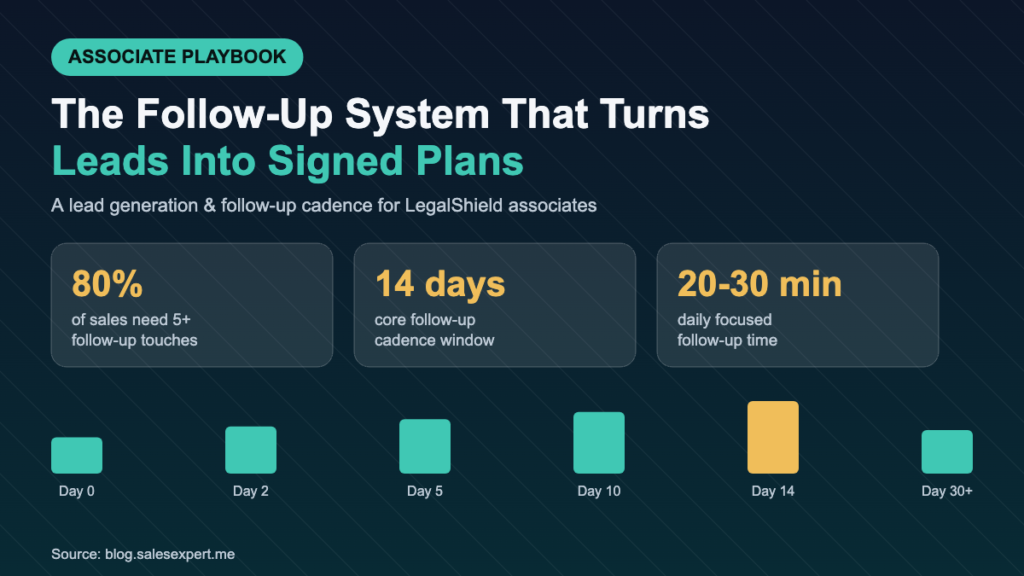

Most LegalShield associates don’t lose sales because their pitch is weak — they lose them because the follow-up stops too soon. Industry data consistently shows that the majority of sales happen after the fifth contact, yet most associates give up after one or two. Here’s a practical, repeatable system for generating leads and following up on them so fewer prospects fall through the cracks.
Why Follow-Up Is the Real Differentiator
Every associate has access to the same plans, the same pricing, and largely the same pitch. What separates a six-figure producer from someone who’s stalled at a handful of sales a month is almost never product knowledge — it’s consistency. A prospect who says “let me think about it” isn’t rejecting LegalShield. They’re asking for more time and more trust, and the associate who shows up again (and again, politely) is the one who eventually earns the signature.
The Math Behind Persistence
Think of your pipeline in stages rather than a single ask. A prospect typically needs to hear about the value of a legal plan more than once before it clicks that they actually need it — especially since most people don’t think about legal protection until they’re already in a crisis. Treating your first conversation as the start of a relationship, not a one-shot pitch, changes how you structure your entire week.
Step 1: Build a Lead Pipeline That Refills Itself
Before you can follow up, you need a steady stream of new conversations. The strongest associates draw from several channels at once rather than relying on one:
- Warm market referrals — ask every satisfied client or new recruit for two or three names, every time.
- Social proof content — short posts about real ways legal plans have helped people (evictions, contract disputes, ID theft) build recognition before you ever make an ask.
- Local business owners — small business plans and group benefits are an underused door-opener; many owners have never been offered affordable legal protection for their company.
- Past “not right now” leads — a prospect who said no six months ago is often a different person today. Life events (a new lease, a new hire, a family issue) reopen the conversation.
Step 2: Set Up a Follow-Up Cadence, Not a One-Off Reminder
The single biggest upgrade most associates can make is replacing “I’ll circle back” with a written cadence. A simple structure that works well:
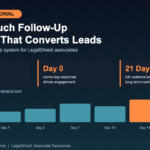
- Day 0 — Initial conversation or intro message; confirm the best way to reach them.
- Day 1–2 — Send a short recap message with one specific benefit tied to what they mentioned (a landlord issue, a new business, aging parents).
- Day 4–5 — Share a quick story or stat that reinforces the value — not a repeat pitch, new information.
- Day 8–10 — Ask a direct, low-pressure question: “Has anything changed since we last talked?”
- Day 14 — Final direct ask, with an easy next step (a link, a call time, a text-back yes/no).
- Day 30+ — Move to a monthly “stay in touch” cycle if there’s still no clear no.
Write this cadence down somewhere you’ll actually see it — a spreadsheet, a CRM, or a simple notes app. The goal isn’t to memorize it; it’s to remove the guesswork of “should I reach out again today?” so you follow up on autopilot instead of relying on willpower.
Keep Every Touch Short
Long, over-explained messages get skimmed or ignored. Each follow-up should take a prospect less than fifteen seconds to read and should end with something easy to respond to — a yes/no question, not an essay.
Step 3: Track Everything So Nothing Slips
The leads that go cold usually aren’t rejections — they’re the ones nobody wrote down. A simple tracking habit prevents this:
- Log every new lead the same day you get it, with the source and the date of first contact.
- Note one personal detail from the conversation (their situation, their objection, their timeline) so your next message feels specific, not generic.
- Block 20–30 minutes daily for follow-ups only — treat it like an appointment, not something you’ll “get to.”
Step 4: Handle the Common Objections Head-On
Most stalled leads come down to a handful of repeatable objections. Prepare a short, honest response for each rather than improvising every time:
- “I don’t think I need it” — ask what would happen tomorrow if they got a lease dispute, a speeding ticket, or a demand letter with no plan in place.
- “It’s too expensive” — reframe against the hourly rate of a single attorney consultation, which usually exceeds a full year of coverage.
- “I need to think about it” — agree, and set a specific date to follow up rather than leaving it open-ended.
Turn This Into a Weekly System
None of this requires more hours in your day — it requires fewer leads slipping through the cracks. Associates who convert consistently aren’t the ones with the best pitch; they’re the ones with the best system for staying in front of people until timing and trust line up. Start by picking one piece — a written cadence, a daily tracking habit, or a short list of objection responses — and build from there.
Ready to tighten up your process? Explore more tutorials, scripts, and lead-generation resources built specifically for LegalShield associates at blog.salesexpert.me, and turn this week’s leads into next month’s commissions.