
Most small business owners don’t think they need a legal plan until something goes wrong. Your job as a LegalShield associate is to start that conversation before the problem arrives. Here is a practical, step-by-step approach to selling small business plans, using real data from LegalShield’s 2026 research.
Why Small Business Owners Are Your Best Conversation Starters
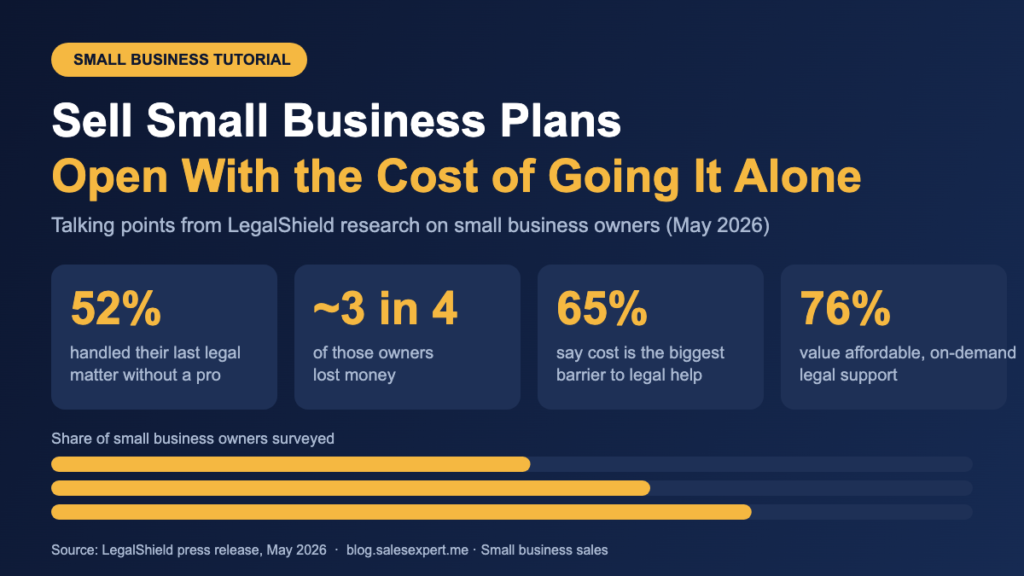
Small business owners deal with contracts, leases, employees, customers, and vendors every week, and most don’t have an attorney on call. According to a May 2026 LegalShield press release, 52% of small business owners handled their most recent legal situation without professional help. Of those, nearly 3 in 4 reported losing money, and about a quarter lost between $25,000 and $100,000.
These numbers give you something better than a generic pitch: a reason for the conversation. You aren’t selling a product, you are asking whether the owner has a plan for the next legal problem.
Step 1: Open With a Question, Not a Pitch
Start by asking about the business, not the plan. Good opening questions include:
- “When your business last had a contract or a dispute, who did you call?”
- “If a customer or vendor threatened to sue tomorrow, what would your first move be?”
- “Do you have someone who reviews your leases and agreements before you sign?”
Let the owner answer fully. Most will admit they would search online, ask a friend, or simply hope it goes away. That answer is your opening.
Step 2: Use the Cost Barrier Honestly
The same research found that 65% of owners say cost is the biggest barrier to getting legal help, and 76% said affordable, on-demand legal support would be extremely or very valuable. That tells you what to emphasize: access and predictability. A membership-style plan can make legal help feel approachable compared to the uncertainty of paying by the hour for every question.
Keep your language accurate. Describe what the plan includes and how members access a provider law firm, and avoid promising specific outcomes or savings. Let the owner’s own situation and the plan details do the work.
A simple way to frame it
Try: “A lot of owners I talk to skip legal help because they think it is too expensive or too complicated. This is a way to have a law firm available when something comes up, without starting from scratch each time. Would it help to see how it works?”
Step 3: Match the Plan to the Real Situation
Ask which of these areas is most pressing for the owner, then tailor your walkthrough:
- Contracts and leases: Reviewing agreements before signing them.
- Customer and vendor disputes: Knowing who to call when a payment or delivery goes sideways.
- Employment questions: Hiring, policies, and the occasional difficult conversation.
- Succession and transitions: The same release notes that about 2.3 million boomer-owned small businesses are expected to change hands this decade, and 28% of owners have no written succession plan.
The transition angle is especially useful with owners nearing retirement. Many haven’t thought about the legal side of selling or passing on a business, and 44% of owners said sale or acquisition advising is the legal service they need most.
Step 4: Handle “I Can’t Afford It Right Now”
This is the most common objection with small business owners, and the data supports a thoughtful answer. Acknowledge the concern first: cash flow is real. Then reframe: “I hear you. What would one unexpected legal problem cost the business in time and money? This is about having support in place before that happens.”
Then stop talking. Silence after a good question is one of the most underrated sales tools you have.
Step 5: Follow Up With Value
Few small business owners buy on the first call. Follow up within a day with a short, useful note, such as a checklist of questions to ask before signing a commercial lease. Then check in again in a week. Consistent, helpful follow-up builds the trust that turns a “maybe” into a signed plan.
Where to Find More Small Business Prospects
Local chambers of commerce, networking groups, and online communities for new business owners are all productive places to start conversations. Pair that outreach with pre-screened leads so your time goes to people who have already raised their hand and asked about legal protection.
Quick Recap
- Lead with questions about the owner’s last legal situation.
- Use real data to show the risk of going it alone, without promising outcomes.
- Emphasize access and affordability, which owners say they want.
- Tailor to contracts, disputes, employment, or succession.
- Follow up with something useful, not just a reminder.
Statistics are from a LegalShield press release dated May 2026. Plan features and availability vary, so always review current plan details and your compliance guidelines before presenting.
Ready to Talk to More Business Owners?
Great conversations start with people who are already looking for legal protection. Get pre-screened legal plan leads at Salesexpert.me and spend your week talking to prospects who want to hear from you.