
Every LegalShield associate hears the same handful of objections: “I can’t afford it,” “I don’t need a lawyer,” “Let me think about it.” These aren’t dead ends. Usually they’re questions the prospect hasn’t asked out loud yet. Associates who close consistently aren’t better talkers. They’re better prepared. This guide covers the six most common LegalShield objections, why prospects raise them, and sample responses you can adapt to your own voice.
First, Change How You Hear Objections
An objection means the prospect is still engaged. People who aren’t interested simply stop answering. When someone pushes back, they’re telling you what’s in the way of a yes. Your job isn’t to win an argument. It’s to understand the concern and help them decide with clear information.
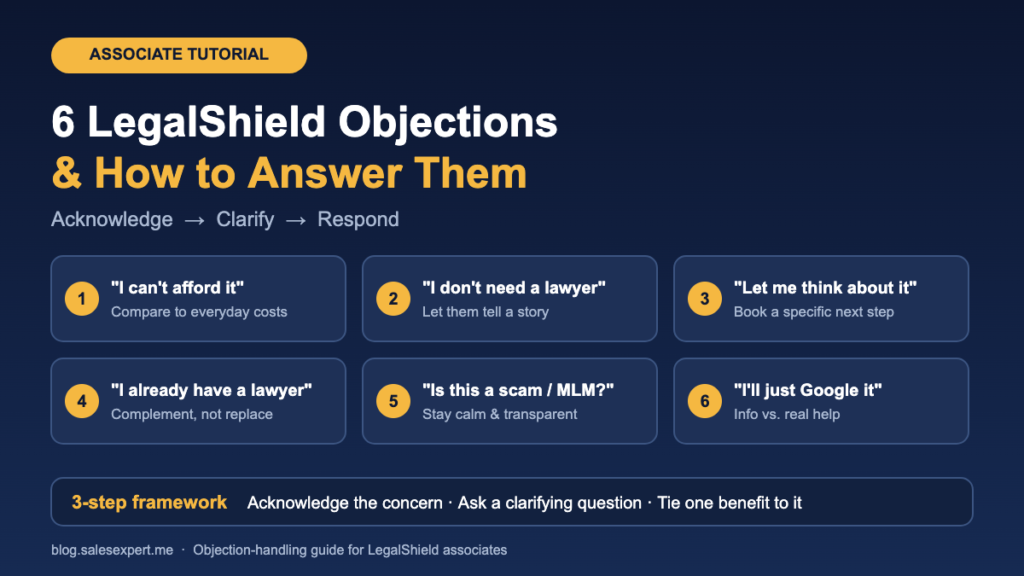
A simple three-step framework works for almost every objection:
- Acknowledge: Show you heard them. “That makes sense” goes a long way.
- Clarify: Ask a question to find the real concern behind the words.
- Respond: Connect a specific plan benefit to that concern, then ask for a next step.
Objection 1: “I Can’t Afford It Right Now”
What it usually means: “I don’t see enough value yet,” or “Money is tight and I need to prioritize.”
Sample response: “I completely understand, budgets are tight for a lot of families right now. Can I ask, if you needed a lawyer to review a contract or write a letter for you today, what would you expect that to cost? The plan is a low monthly membership, and one phone call or document review can often pay for months of coverage. Would it help to look at which plan level fits your budget?”
Tip: Compare the monthly cost to everyday expenses the prospect already pays for, like streaming or phone insurance. Don’t dismiss the concern. If the timing really isn’t right, set a follow-up date.
Objection 2: “I Don’t Need a Lawyer”
What it usually means: “I think of lawyers as something for big emergencies.”
Sample response: “Most people feel that way until something small comes up, like a landlord keeping a deposit, a traffic ticket, or a contract they’re not sure about. The plan is less about lawsuits and more about having someone to call for everyday questions. Have you dealt with anything like that in the last year or two?”
Tip: Let the prospect tell their own story. Almost everyone has faced a lease, will, ticket, or billing dispute. Once they name one, the value becomes personal.
Objection 3: “Let Me Think About It”
What it usually means: “I have a concern I haven’t shared,” or “I need to talk to someone else.”
Sample response: “Of course, it’s an important decision. Just so I can help, is there a specific part you’re unsure about, like cost, coverage, or how it works? And is there anyone else, like a spouse or business partner, who should be part of the conversation?”
Tip: Never end the call without a specific next step. Book a date and time to reconnect, ideally with the decision-maker on the line.
Objection 4: “I Already Have a Lawyer”
What it usually means: “I have someone I’d call for something big.”
Sample response: “That’s great, it’s smart to have a relationship with an attorney. Do you call them for small things, like reviewing a lease or asking a quick question? Many members keep the plan for everyday needs so they’re not paying hourly rates for routine questions.”
Tip: Position the plan as a complement, not a replacement. Don’t criticize their current attorney.
Objection 5: “Is This a Scam or an MLM?”
What it usually means: “I’ve been burned before,” or “I’ve heard mixed things online.”
Sample response: “That’s a fair question, and I’m glad you asked. LegalShield has provided legal plans for decades, and members get access to independent provider law firms. You’re buying a membership for legal services, and you can review the plan details and terms before signing up. What have you heard that I can clear up?”
Tip: Stay calm and transparent. Point prospects to official plan information rather than making promises. Credibility builds trust faster than enthusiasm.
Objection 6: “I’ll Just Google It When I Need Help”
What it usually means: “I think free online information is good enough.”
Sample response: “Online information is a great starting point, but it can’t tell you what applies to your situation in your state. With the plan, you can talk through your actual documents with an attorney. It’s the difference between reading about a problem and having someone help you handle it.”
Tip: Use a concrete example: a letter from an attorney to a contractor or landlord often gets a faster response than a strongly worded email.
Practice Makes It Natural
Reading scripts isn’t enough. The associates who handle objections smoothly have practiced them out loud. Try this:
- Role-play weekly with your upline or a teammate, taking turns as the prospect.
- Record yourself answering each objection and listen for filler words or defensiveness.
- Track objections in your CRM or spreadsheet. If one keeps coming up, fix it earlier in your presentation.
- Keep it compliant. Describe coverage accurately, avoid guaranteeing outcomes, and refer to official plan documents for terms and limitations.
Common Mistakes to Avoid
- Arguing. Winning the debate usually means losing the sale.
- Answering too fast. Ask a clarifying question before you respond.
- Over-explaining. Give one clear, relevant benefit, not a ten-minute feature list.
- Taking it personally. An objection is about the decision, not about you.
Handle Fewer Objections With Better Leads
The easiest objections to handle are the ones you never hear. Prospects who already know why they want legal coverage come to the call with fewer doubts. Salesexpert.me delivers pre-screened legal plan leads to LegalShield associates, so your conversations start with interest instead of skepticism. Pair quality leads with the responses above and you’ll turn more “not right now” answers into enrolled members.
Ready for warmer conversations? Visit Salesexpert.me to get quality LegalShield leads today.